Question? [email protected]
Attention: Ecommerce owners with good products that should be selling better...
HOW A £2.5 MILLION FOOTBALL REVEALS THE HIDDEN VALUE IN YOUR PRODUCTS
And how you can use the same principle to help customers see why the products you already sell are worth buying.
ATTENTION: ECOMMERCE OWNERS WITH GOOD PRODUCTS THAT SHOULD BE SELLING BETTER...
HOW A £2.5 MILLION FOOTBALL REVEALS THE HIDDEN VALUE IN YOUR PRODUCTS
And how you can use the same principle to help customers see why the products you already sell are worth buying.
THIS OFFER WILL EXPIRE IN...
More about that football in a minute.
First, I want to talk about something you've almost certainly been taught about selling products online.
Features and benefits.
You know the drill.
Don't just tell people what the product has or does. Explain the benefit to the customer.
It's probably one of the oldest lessons in marketing.
There's just one problem.
IT DOESN'T GO FAR ENOUGH.
And if your product pages stop at the benefit, you may still be leaving the most powerful part of the product's value completely hidden.
That's what The Hidden Value Method is designed to fix.
A short, practical £7 workshop that gives you a 2-step process for uncovering the value your customers can't currently see - and identifying the one part of that value most likely to drive the sale.
Buy today for £7 and get instant access to the recorded workshop.
FEATURES AND BENEFITS WERE NEVER THE WHOLE STORY
Most of us learned features and benefits years ago.
Feature: This blackout blind blocks early morning light.
Benefit: You can sleep for longer without sunlight waking you up.
Better.
We've moved away from describing what the product does and explained what the customer gets from it.
But I don't think we've finished the job.
Because why does that customer actually care about sleeping longer?
What are they really trying to get?
That's the part most feature-and-benefit thinking leaves unfinished.
And it's often where the biggest chunk of hidden value is sitting.
A BENEFIT CAN STILL BE ONE STEP REMOVED FROM WHAT YOUR CUSTOMER ACTUALLY WANTS.
Customers don't buy products simply because they can intellectually understand the benefits.
They buy because something about the product connects with something they genuinely want.
Comfort
Confidence
Recognition
Freedom
Identity
Belonging
Status
Or simply the feeling that life will be better in some meaningful way after buying it.
But there's another problem.
A product can connect to several of those things at once.
And they are not equally powerful.
One might be interesting.
Another might help.
But one can sit above the others as the real driver behind the purchase.
The one ring to rule them all... (yes... I love the Lord of the Rings!)
Finding a few possible reasons someone might want your product is relatively easy.
Properly uncovering what sits beneath the obvious benefit - and then identifying the one reason most likely to drive the sale - is where it becomes commercially useful.
That's what The Hidden Value Method teaches you to do.
WHICH BRINGS ME BACK TO THAT £2.5 MILLION FOOTBALL...
In August, the Adidas Azteca used during Argentina's famous 1986 World Cup quarter-final against England sold for £2.5 million.
It was the ball involved in both Diego Maradona's infamous "Hand of God" goal and, just minutes later, the goal that became known as the "Goal of the Century".
Now imagine trying to explain its value using conventional feature-and-benefit thinking.
The features are hardly impressive.
Leather. Stitching. Inflatable. Round.
Even the obvious benefit - own a genuine piece of football history - still doesn't fully explain why somebody would spend £2.5 million on it.
Because what does owning it ultimately give them?
They own something almost nobody else in the world can own.
They can display it.
Talk about it.
Show it to people.
Become the person who owns that football.
There is emotion, identity, exclusivity and, let's be realistic, an enormous amount of status wrapped up in that purchase.
THAT'S WHERE THE HIDDEN VALUE LIVES.
But even then, there's another job to do.
Is the real driver nostalgia?
Exclusivity?
Identity?
Status?
Those are very different selling ideas.
Finding several plausible answers is easy.
Knowing which one should sit at the centre of the sale is the harder - and more valuable - part.
Your products probably aren't World Cup memorabilia.
But an ordinary product can still connect with something a customer cares about far more than its specifications suggest.
Take a blackout blind for a child’s bedroom.
For a parent whose child wakes as soon as daylight fills the room, those early starts can leave them exhausted before the day has properly begun. They want to enjoy breakfast with their children, but find themselves tired, irritable and struggling with things they’d normally take in their stride.
If early daylight is causing the waking, keeping it out can help the child sleep longer and give the parent a chance to get more rest too.
Now the buying reason becomes much more personal: starting the morning feeling like themselves again, with the patience and energy to enjoy the people they love.
The blind hasn’t changed. But you’ve connected it to something that matters far more to that parent than how much light the fabric blocks.
YOUR PRODUCT PAGE MAY BE LEAVING MONEY ON THE TABLE
You've probably already translated your important features into benefits.
Good.
You should.
But if that's where you stop, you can end up with a perfectly competent product page that still fails to communicate the strongest reason somebody actually wants what you're selling.
And even if you do go deeper, another danger appears:
You can find five perfectly reasonable reasons somebody might want the product and still choose the wrong one to lead with.
That's when products start sounding interchangeable.
"This jacket keeps you warm."
"This serum makes your skin feel smoother."
"This chair gives you somewhere comfortable to sit."
All legitimate benefits.
None necessarily reach the thing that makes someone think:
"Yes. That's exactly what I want."
The Hidden Value Method is about finding that missing value and knowing which part deserves to lead the sale.
THAT'S WHY I BUILT THE HIDDEN VALUE METHOD
Hi - I'm Rob McNicoll, and I've spent more than 25 years in marketing and ecommerce, managed advertising budgets of up to £200,000 a month and worked across more than £256 million in attributed revenue.
And the more product pages I look at, the more obvious this gap becomes.
Features alone aren't enough.
Most good ecommerce businesses already know that.
But benefits alone aren't enough either.
And simply brainstorming a deeper list of customer wants isn't enough.
The Hidden Value Method gives you a 2-step process for taking one real product,
uncovering the hidden value sitting beyond the obvious benefit, and working out which part of that value matters most.

TWO BUSINESSES I’VE HELPED GROW
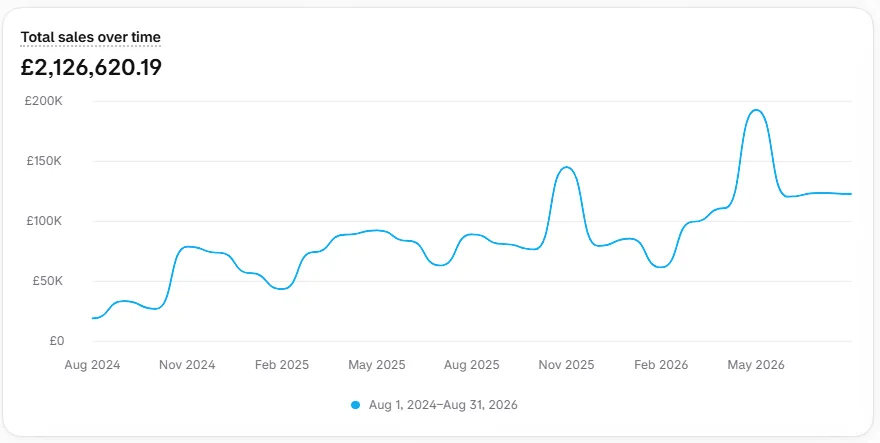
From around £20k to £120k+ a month
When I started in August 2024, this business was doing around £20k a month. By December, it was roughly £74k. By August 2026, monthly revenue was £120k+, having peaked at around £190k in May.
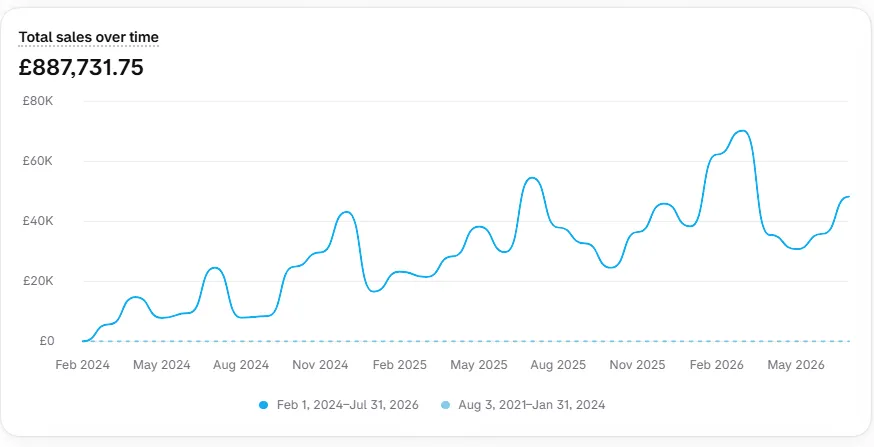
From £0 to £43k a month in 10 months
I helped these guys launch, and we grew the business from £0 to £43k a month in 10 months.
The Hidden Value Method formed part of the wider commercial work behind these results. It tackles one specific job: helping customers see the strongest reason to buy your product.
WHAT YOU GET WITH THE HIDDEN VALUE METHOD
The Hidden Value Method is a recorded workshop lasting around 20 minutes. Watch it whenever it suits you, pause while you work on your own product, and come back to it whenever you need to.
You’ll learn how to uncover what makes a product worth buying in your customer’s eyes, then decide which buying reason deserves to lead your page.
The two-step Hidden Value process - go beyond the obvious benefit and uncover what a customer may really want from the product, without relying on vague advice to “think more emotionally”.
A way to choose the strongest buying reason - when you find several possible reasons someone might buy, work out which one deserves to lead, so your page isn’t pulling in five directions at once.
A practical exercise using one of your products - apply the thinking to something you already sell, rather than finishing with an interesting idea and no clear next move.
One product-page improvement to make - leave with a specific change to put into practice, so the workshop gives you something useful to act on straight away.
Start with one product, apply what you’ve learned and make the change. You can then use the same method on any other product on your website.
THIS ISN'T ANOTHER FEATURES & BENEFITS COURSE
Quite the opposite.
I'm making the case that the traditional features-and-benefits approach is incomplete.
Useful, certainly.
But incomplete.
And I'm not simply going to tell you to "think more emotionally".
That's too vague to be useful.
You need a proper way to uncover the hidden value sitting beyond the benefit.
Then you need to know which part matters most.
Because there may be several things your customer wants from the product.
But one of them is usually doing more of the heavy lifting than the others.
That's the one you need to find.
WHO THIS IS FOR
The Hidden Value Method is for ecommerce owners who already have products online and suspect those products are better than their pages make them feel.
If you're looking for a complete ecommerce strategy, this isn't it.
If you want a magic phrase guaranteed to double conversion, I can't give you one.
And if you haven't launched yet, save your £7 until you have a real product page to work on.
This is a tactical fix designed to help the products you already have work harder.
WHY £7?
The Hidden Value Method is £7 - about the price of a coffee and a pastry.
I’ve kept the price low so you can try it on a product you already sell and judge its value in your own business.
You get instant access to the roughly 20-minute recorded workshop, a practical method you can use across your products, and a specific improvement to make to your first page.
Put that against what one extra order is worth to you. If it contributes at least £7 after costs, one additional order influenced by the improvement would cover the price of the workshop.
You’ve already done the work of creating or choosing your products and getting them online. This is a small investment in helping customers see why they’re worth buying.
And yes - in case you were wondering there is another reason it's only £7!
I have other products to help you grow your business and when you try this one and it works for you, I'm hoping you'll come back for more.
But totally cool if you don't.
MY 30-DAY GUARANTEE
Buy The Hidden Value Method for £7 and try it for yourself.
If you don't think the exercise alone was worth considerably more than the £7 you paid, email me within 30 days and I'll refund you.
No hoops. No argument.
FEATURES TELL THEM WHAT IT IS.
BENEFITS TELL THEM WHAT IT DOES FOR THEM.
But there is another question underneath both:
Why do they really want that?
And then one more:
Of all the reasons they might want it, which one matters most?
That's where the hidden value sits.
The Hidden Value Method will show you how to find it.
Best,
Rob
P.S. That £2.5 million football makes the distinction unusually easy to see. Nobody paid millions because it was good at being a football, and even "own a piece of history" doesn't quite reach the end of the story. Go deeper and you uncover the hidden value. The real skill is knowing which part of that value matters most. That's what The Hidden Value Method will help you work out.
FREQUENTLY ASKED QUESTIONS
Is this just about features and benefits?
No. That's specifically the problem The Hidden Value Method addresses. Features and benefits are useful, but they stop too early. The workshop shows you how to uncover the value sitting beyond the benefit, then identify which part is most likely to drive the sale.
Couldn't I just brainstorm the reasons somebody wants my product?
You could, and you'd probably come up with several plausible answers.
The problem is knowing whether you've gone deep enough - and then knowing which of those answers actually matters most commercially.
That's what the 2-step process is designed to solve.
Is this a copywriting course?
It’s a focused workshop to help you find the strongest reason a customer would want your product and use that understanding to improve its page.
You’ll apply the method to a product you already sell and identify a specific change to make. That could mean changing the headline, the opening description or the main message you lead with.
You don’t need to be a copywriter. The aim is to help your customer see why your product is worth buying.
How long does it take?
Allow around 20-30 minutes using one product from your own store.
Will this work for lower-priced products?
Yes. Customers make value judgements at every price point. The principle isn't dependent on selling premium products.
What if value isn't my problem?
Then this may help you rule it out. Customers can also fail to buy because they have unanswered questions, lack confidence or encounter friction elsewhere. The Hidden Value Method deliberately tackles one specific part of that decision.
When will I get access?
You’ll get instant access as soon as you buy. The workshop is recorded, so you can watch it whenever it suits you and work through it at your own pace.
This site is not a part of the Facebook website or Facebook Inc. Additionally, This site is NOT endorsed by Facebook in any way. FACEBOOK is a trademark of FACEBOOK, Inc.